 Thomas Kelly
23 June 2026
Thomas Kelly
23 June 2026
Mechanical engineering, at its core, is about making things work better. We’re talking about everything from designing the car you drive to the tiny components inside your smartphone. It’s a field constantly evolving, and today, that evolution is happening at an incredible pace. What does that mean for us in practical terms? It means more efficient systems, more advanced machines, and solutions to problems that seemed insurmountable not so long ago. This article will dive into some of the most impactful advancements and how they’re being applied right now.
Remember when materials were just… materials? Now, they’re becoming stars of the show, offering properties we could only dream of before. This isn’t just about making things stronger; it’s about making them adaptable, lighter, and even self-healing.
The Rise of Composites
Composites aren’t new, but their application and sophistication have exploded. We’re moving beyond simple fiberglass to incredibly complex, multi-layered structures. Think aerospace — lighter planes mean less fuel, and that’s a win for everyone. But it’s not just planes.
- Carbon Fiber on Steroids: We’re seeing advanced carbon fiber reinforced polymers (CFRPs) being used in everything from high-performance bicycles to prosthetic limbs. They offer an unparalleled strength-to-weight ratio, allowing for designs that were previously impossible.
- Smart Composites: These are composites with integrated sensors or actuators. Imagine a bridge that can tell you when it’s under stress or a wind turbine blade that can adjust its shape to optimize airflow. This isn’t science fiction; it’s happening.
Self-Healing Materials
This sounds like something out of a superhero movie, but it’s very real. Imagine a crack forming in a material, and it repairs itself. This has massive implications for longevity and safety, especially in critical infrastructure.
- Microcapsule Technology: One common approach involves embedding tiny capsules filled with healing agents within the material. When a crack forms, it breaks these capsules, releasing the agent to fill and seal the damage.
- Biomimicry: Engineers are studying how biological systems repair themselves (think how skin heals) to inform the design of synthetic self-healing materials. It’s a fascinating cross-disciplinary field.
Nanomaterials and Their Tiny Wonders
Working at the nanoscale opens up a world of possibilities. Materials engineered at this level exhibit unique properties that aren’t present in their larger counterparts.
- Graphene and Beyond: Graphene, a single layer of carbon atoms, is incredibly strong, conductive, and lightweight. It’s being explored for everything from supercapacitors to flexible electronics and even water filtration.
- Nanocoatings: These thin layers can provide enhanced protection against corrosion, wear, and even biological fouling. Imagine a medical implant that resists bacterial growth or a ship’s hull that stays cleaner for longer.
The Power of Simulation and Digital Twins
Designing complex machines used to involve a lot of trial and error, physical prototypes, and lengthy testing cycles. Now, engineers can do a significant amount of that work in a virtual environment, saving time, money, and resources.
Advanced Computational Fluid Dynamics (CFD)
CFD allows engineers to simulate fluid flow (like air or water) around and through objects. This is critical for optimizing designs in aerospace, automotive, and even biomedical applications.
- Aerodynamic Optimization: Automakers use CFD to design sleeker cars with better fuel efficiency. Aircraft designers use it to fine-tune wing shapes for maximum lift and minimum drag.
- Biomedical Applications: CFD is helping us understand blood flow in arteries, design more efficient artificial heart valves, and even analyze airflow in the human respiratory system to better treat conditions.
Finite Element Analysis (FEA) for Structural Integrity
FEA is a powerful tool for predicting how a complex structure will react to forces, heat, and other environmental factors. It breaks down a complex object into many small “elements” and analyzes their interactions.
- Stress and Strain Prediction: Before a single part is manufactured, FEA can identify areas of high stress, potential failure points, and optimal material distribution, leading to safer and more durable designs.
- Thermal Analysis: From engine components to circuit boards, FEA helps engineers understand how heat will distribute and affect performance, preventing overheating issues.
Digital Twins: A Virtual Mirror
A digital twin is a virtual replica of a physical object, system, or process. It’s not just a 3D model; it’s a living, breathing digital counterpart that constantly updates with real-time data from its physical twin.
- Predictive Maintenance: Imagine a digital twin of a factory robot. It can analyze sensor data from its physical counterpart, predict when a component is likely to fail, and even suggest necessary maintenance before an actual breakdown occurs. This drastically reduces downtime and saves money.
- Performance Optimization: By continuously monitoring and simulating, digital twins help engineers understand how their systems are performing in the real world and identify opportunities for optimization, such as refining operational parameters or adjusting control strategies.
- Design and Testing: Digital twins allow for “what-if” scenarios and testing of new configurations in a virtual environment without risking the actual physical system. This is invaluable when dealing with expensive or critical equipment.
Robotics and Automation: Beyond the Assembly Line
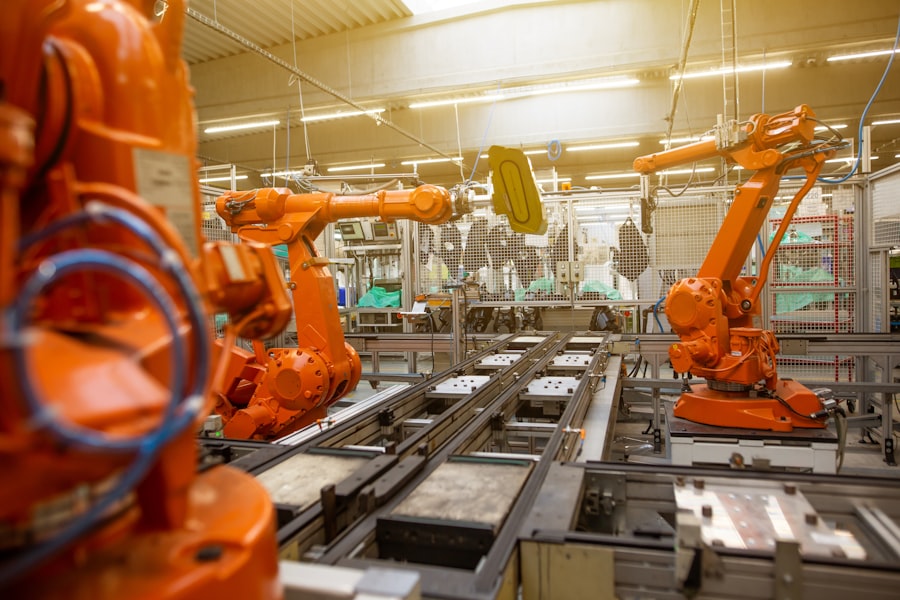
Robots have been in factories for decades, but their capabilities and applications have evolved dramatically. We’re moving beyond repetitive, pre-programmed tasks to robots that can adapt, learn, and even collaborate with humans.
Collaborative Robots (Cobots)
Traditional industrial robots were often caged off for safety reasons. Cobots are designed to work alongside humans, sharing a workspace and interacting directly.
- Enhanced Flexibility: Cobots are easier to program and reconfigure, making them ideal for tasks with varying demands or small-batch production.
- Human-Robot Interaction: They can assist with physically demanding or repetitive tasks, improving ergonomics for human workers and boosting overall productivity. Think of a cobot handing a worker a specific tool or holding a heavy component in place.
Autonomous Mobile Robots (AMRs)
Unlike Automated Guided Vehicles (AGVs) which follow fixed paths, AMRs can navigate dynamic environments, avoid obstacles, and make their own decisions about the most efficient route.
- Logistics and Warehousing: AMRs are revolutionizing warehouses by autonomously transporting goods, improving efficiency, and reducing the need for human forklift operators in potentially hazardous environments.
- Inspections and Monitoring: From inspecting pipelines to surveying construction sites, AMRs equipped with sensors can collect data in areas that are difficult or dangerous for humans to access.
Surgical Robotics
Robots are increasingly assisting surgeons in complex procedures, leading to greater precision, smaller incisions, and faster patient recovery times.
- Minimally Invasive Surgery: Systems like the da Vinci Surgical System allow surgeons to perform intricate operations with enhanced dexterity and visualization through small incisions, reducing trauma to the patient.
- Precision and Stability: Robots can maintain steady positions and execute movements with a level of precision that is difficult for even the most skilled human surgeon, particularly during long procedures where fatigue can be a factor.
Additive Manufacturing: Building Dreams Layer by Layer
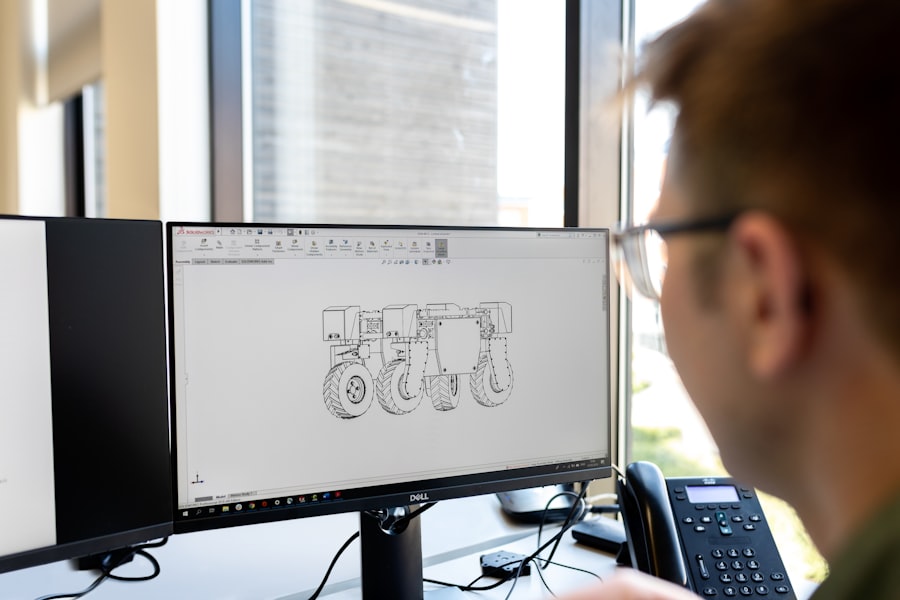
3D printing, or additive manufacturing, has gone from a prototyping tool to a bona fide production method, completely changing how we design and create physical objects.
Metal 3D Printing
While plastic 3D printing is common, the ability to print complex metal parts is truly transformative, especially in high-performance industries.
- Topology Optimization: This allows engineers to design structures that are incredibly light yet strong, by optimizing material usage based on load requirements. Think organic, lattice-like structures that couldn’t be manufactured any other way.
- Customization and Prototyping: Metal 3D printing enables the creation of highly customized parts on demand, reducing lead times and the need for expensive tooling. It’s also ideal for rapid prototyping of functional metal components.
- Complex Geometries: Parts with internal channels, intricate cooling paths, or features impossible to achieve with traditional subtractive manufacturing (machining) can now be created. This is a game-changer for aerospace engines and medical implants.
Bioprinting for Medical Applications
This is where 3D printing meets biology. Bioprinting involves using bio-inks containing living cells to create tissues and even organs.
- Tissue Engineering: Researchers are bioprinting functional tissues like skin, cartilage, and even vascular structures for drug testing, disease modeling, and ultimately, transplantation.
- Organ-on-a-Chip: This involves creating miniaturized organ models on a chip, allowing for highly accurate testing of drugs and therapies without using animal models.
- Personalized Medicine: In the future, bioprinting could allow for the creation of patient-specific implants or even organs, reducing rejection rates and improving treatment outcomes.
Hybrid Manufacturing
This combines the strengths of both additive and subtractive manufacturing. A part can be 3D printed to create complex geometries, and then precisely machined to achieve a perfect surface finish or tight tolerances.
- Optimized Production: This approach allows for the creation of parts that are both geometrically complex and dimensionally accurate, overcoming some of the limitations of additive manufacturing alone.
- Repair and Rework: Hybrid systems can also be used to repair existing metal parts by adding material to worn or damaged areas and then machining them back to their original specifications.
Energy Systems and Sustainability: Greener Horizons
Mechanical engineers are at the forefront of developing more sustainable energy systems and improving the environmental footprint of existing technologies.
Advanced Renewable Energy Technologies
Harvesting energy from natural sources continues to get more efficient and sophisticated.
- Next-Gen Wind Turbines: We’re seeing innovations in blade design, turbine materials, and control systems that allow wind turbines to capture more energy even in lower wind conditions, while also reducing noise and visual impact. Floating offshore wind farms are also becoming a reality, opening up vast resource potential.
- Improved Solar Concentrators: Beyond flat photovoltaic panels, mechanical engineers are designing concentrating solar power (CSP) systems that use mirrors to focus sunlight onto a receiver, generating heat to produce electricity or for industrial processes. These systems are becoming more efficient and cost-effective.
- Geothermal Innovations: Harnessing heat from the Earth’s interior is being made more accessible through advanced drilling techniques and heat exchanger designs, making geothermal a more viable renewable option in more locations.
Energy Storage Solutions
The intermittent nature of many renewables (sun doesn’t always shine, wind doesn’t always blow) makes energy storage crucial. Mechanical engineers are working on pushing the boundaries here.
- Advanced Battery Technologies: Beyond lithium-ion, research is focused on solid-state batteries, flow batteries, and other chemistries that offer higher energy density, faster charging, and longer lifespans for everything from electric vehicles to grid-scale storage.
- Mechanical Energy Storage: This includes pumped-hydro storage (pumping water uphill to release it later), compressed air energy storage (CAES), and flywheel energy storage. These mechanical systems can store and release large amounts of energy efficiently for grid stabilization.
- Thermal Energy Storage: Storing heat or cold for later use in industrial processes, buildings, or for power generation is another avenue. This could involve molten salts, phase-change materials, or even large underground thermal reservoirs.
Carbon Capture and Utilization (CCU)
Reducing carbon dioxide emissions is critical, and mechanical engineers are designing systems to capture CO2 from industrial sources or even directly from the air, and then either store it or convert it into useful products.
- Direct Air Capture (DAC): These systems use large fans and chemical processes to remove CO2 directly from the atmosphere, offering a way to actively reduce existing greenhouse gas concentrations.
- Industrial Carbon Capture: Systems are being developed and deployed to capture CO2 from power plants and industrial facilities before it enters the atmosphere. This captured CO2 can then be sequestered underground or utilized for other purposes.
- CO2 Conversion Technologies: Researchers are exploring ways to convert captured CO2 into valuable products like fuels, plastics, and building materials, turning a waste product into a resource.
These advancements aren’t just theoretical; they are actively shaping our world. From the micro-scale of new materials to the macro-scale of global energy systems, mechanical engineering continues to drive innovation, making things more efficient, safer, and sustainable. It’s an exciting time to be involved in a field that’s building the future, quite literally, piece by piece.